Perceptual Ambiguity in Composition
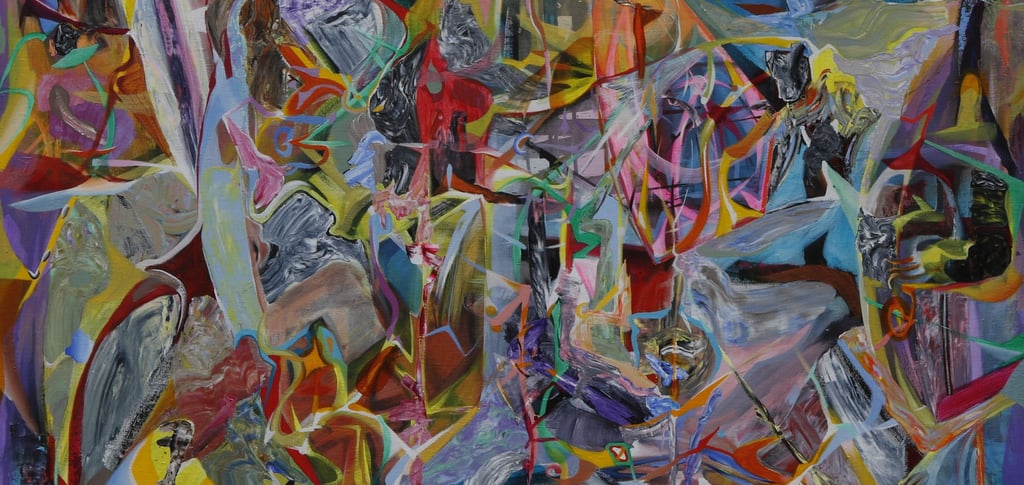
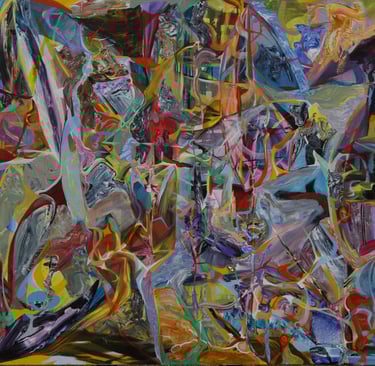
Perceptual Ambiguity in Composition
I once referred to the origin of my work as “the source,” though that term implies a place one travels to. My experience is different. It is always present—within me and beyond me at the same time. It is not something I create or control. Rather, I listen to it.
This listening is not purely auditory; it is sensory and visual, a form of dialogue. In acting as its medium, I sense its movement toward a vision. I have known this presence for so long that it feels like home, yet I have no sense of ownership over it, nor any belief that I exist separately from it.
My intention in artistic expression is to reveal less of the psychology of the artist and more of what might be called the universal or true self. In this way, the creative process closely resembles meditation. It is a state of being that does not seek change. The act of working carries an effortless quality—there is no expectation, only awareness. At times, this state includes experiences of timelessness and an empty mind.
The Blueprint of New Expression
"This is not abstract expression; it's not about removing something from its context. It allows space for illusions to manifest, serving as a sounding board for our consciousness. The complexity lies in information (the vocabulary of mark-making) and diversity. If you evaluate it as abstract expressionism, as many mistakenly do, it becomes nonsensical due to the lack of a clear benchmark for comparison. This is the blueprint. The aesthetic in this new form of expression remains to be understood. The ‘function’ of the expression is fundamental. Over time, I imagine an aesthetic will evolve to illustrate this. One of the roles of artists is to present ‘new ways of seeing.’”